5 Reasons Your Neck Still Needs Cracking 20 Times A Day — And The One Thing That Finally Holds
Summary: If you crack your neck or upper back all day and the stiffness always comes back, the problem isn't willpower and it isn't that you haven't found the right product yet. It's that the crack was never capable of changing anything — and every solution you've bought since has delivered one third of what tight tissue actually needs. Here are the five reasons nothing has held, and the ten-minute approach that addresses all three factors at the same time.


You already know the exact motion.
Chin down and across. Hand on the side of your head. That specific angle you've found over the years that gets the one at the base of your skull to go.
And it works. That's the part nobody says out loud. It genuinely works — for about twenty minutes.
Then the pressure builds back, and you're doing it again. At your desk. In the car. In the bathroom at work because you know how loud it is. Twenty times a day, maybe more, and you stopped counting a while ago.
You've promised yourself you'd stop. More than once. And then ten minutes later you're pushing on the joint again, and the promise doesn't even register as a promise anymore.
And underneath it there's a thought that doesn't go away: if I don't crack it, something's going to be wrong. But if I do crack it, I'm probably damaging something.
There is no version of that where you win.
So here's what's actually happening — and it is not what you've been told.
1. You're Cracking The Joint That Isn't Stuck
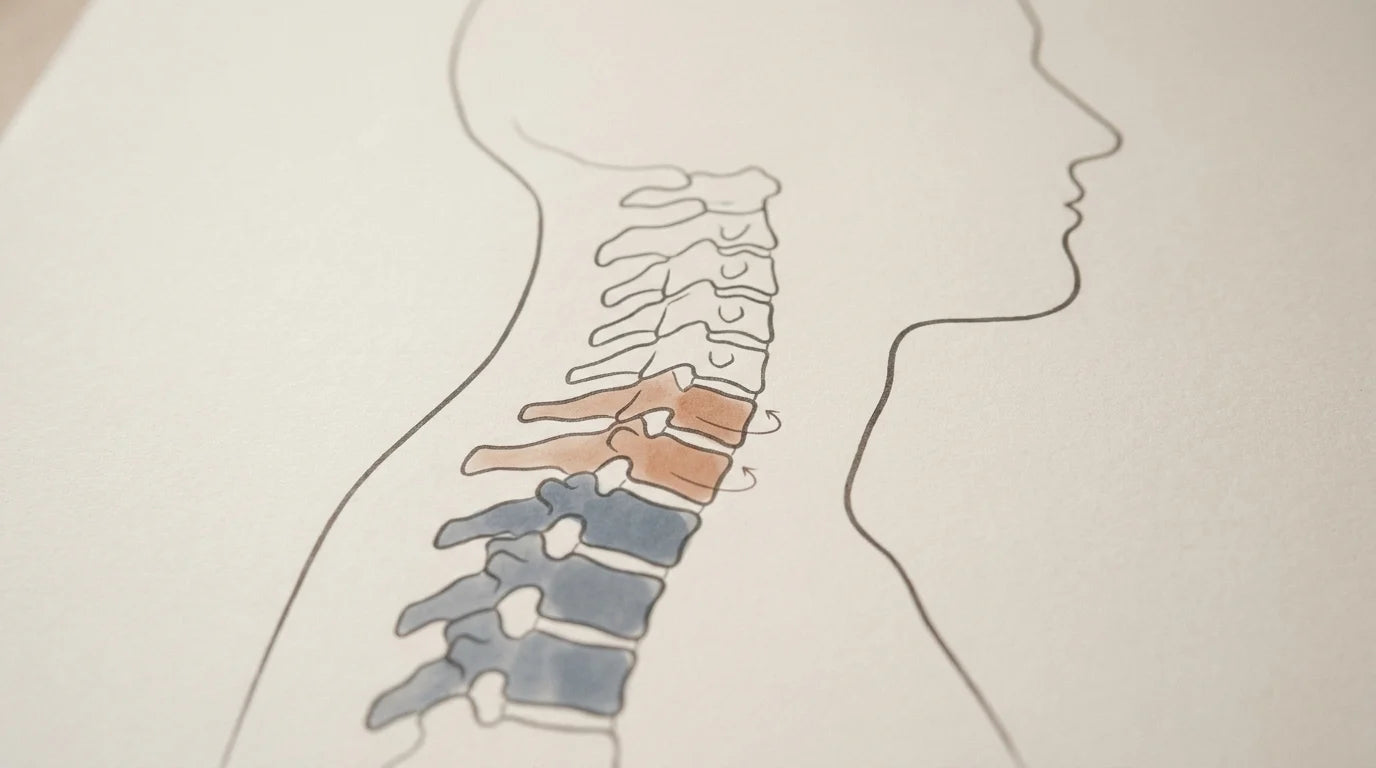
Here's the part that reframes everything: stiff joints don't crack. They're stiff. That's what stiff means.
When a segment in your upper back is genuinely restricted, it doesn't move, so it can't cavitate, so it makes no sound. The joints that pop for you are the ones with too much movement — the ones next door, taking up the slack for the ones that won't budge.
That's why you can crack it, feel the release, and still feel stuck. You just moved the joint that was already moving fine.
You weren't failing to try hard enough. You've been pulling a lever that isn't connected to the thing you're trying to move.
2. The Crack Is A Signal, Not A Change
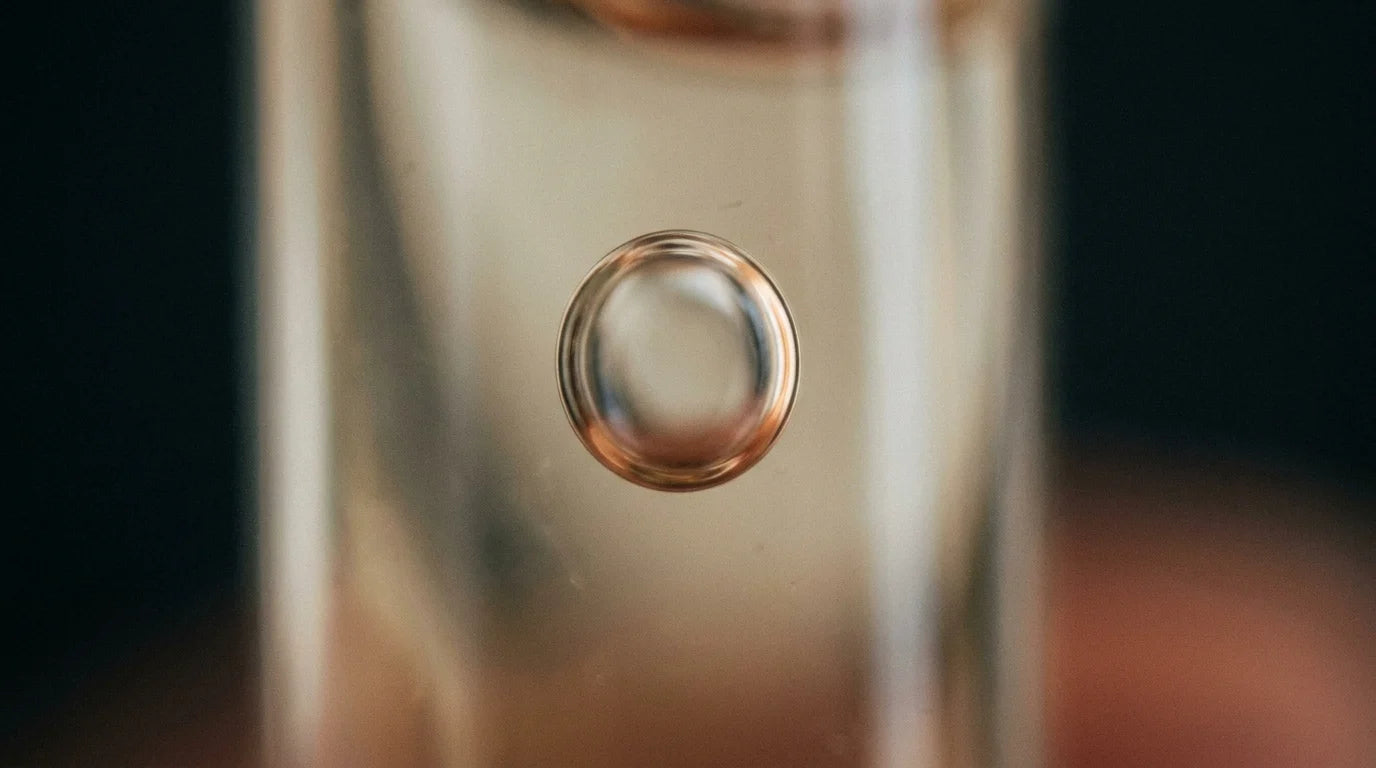
The sound is gas coming out of solution in the joint fluid. The relief that follows is a nerve signal — the joint's sensors briefly telling the surrounding muscles to stand down.
Nothing has lengthened. Nothing has released. Nothing structural has changed.
And there's a detail that explains your entire day: once that gas comes out, it takes roughly 20 to 30 minutes to redissolve before the same joint can pop again.
Which is why you'll try, get nothing, and try again. And again. Not because you're doing it wrong — because for twenty minutes the mechanism is physically unavailable, and your neck still feels exactly the way it felt before.
3. Every Crack Makes The Next One More Necessary

This is the part that sounds like bad news and is actually the opposite.
Repeated self-manipulation gradually reduces the passive stiffness of the supporting tissue around a segment that was already the loose one. When the passive support drops, the muscles have to do more of the stabilising work. So they grip harder. So it feels tighter. So the urge is stronger than it was last year.
That's the escalation you've noticed. It went from occasional, to daily, to constant, and you couldn't point to when.
Which means the urge is not a malfunction. The urge is a correct signal about a real restriction — aimed at the wrong joint.
Your body isn't lying to you. It's just badly targeted.
4. Everything You've Bought Delivers One Third Of The Answer
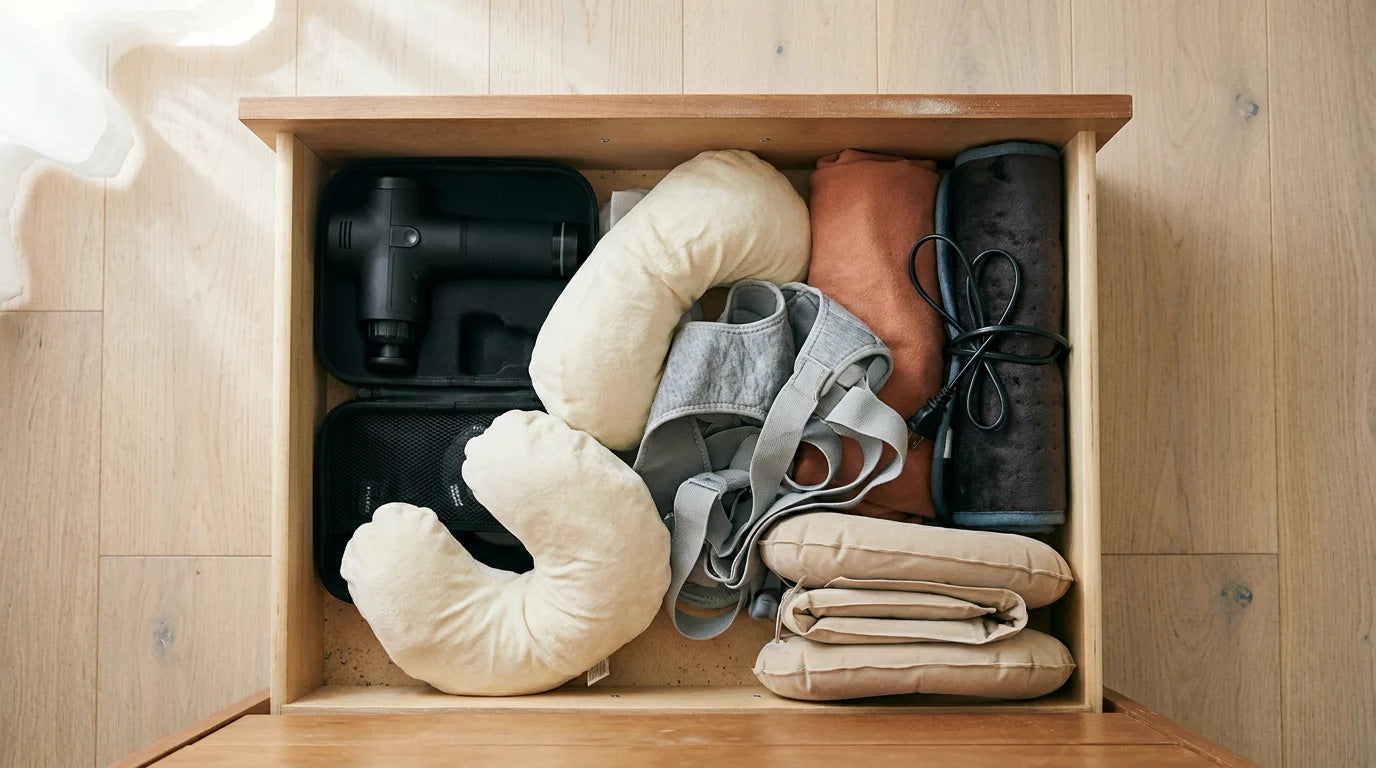
Tight tissue needs three things to hold a new length: the muscles have to let go, the tissue has to be warm enough to lengthen instead of springing back, and a sustained pull has to give it somewhere to go.
Miss one, and it recoils. Every time. Here's the graveyard:
| What you tried | What it gave you | What was missing |
|---|---|---|
| Your own hands | A release signal — 0.2 seconds, wrong joint | Warmth, sustained load |
| Massage gun | Muscles let go | Warmth, sustained load |
| Heat pad or wrap | Warmth | Release, sustained load |
| Neck hammock / strap traction | Sustained load | Release, warmth |
| Stretching routine | Load — cold, brief | Release, warmth |
| Posture corrector | Position, by force | All three |
| Chiropractor | A release — once, fast, skilled | Warmth, sustained load |
| Painkillers | Signal suppression | Everything mechanical |
Look at the middle column. Every single one worked. That's the frustrating part — none of them were scams, and none of them were nothing. They each did their one job correctly and then the other two didn't happen, so the tissue went back.
Same category of thing: mechanical input, brief neural release, nothing loading the tissue. It lasts minutes instead of seconds. Then it reverses.
And you can't stack them. Heat pad, then massage gun, then a stretch is three sequential thirds — by the time you start the second one, the first has already worn off.
5. Nothing Changes In Two Tenths Of A Second, Cold
Two things about tissue that explain the last five years.
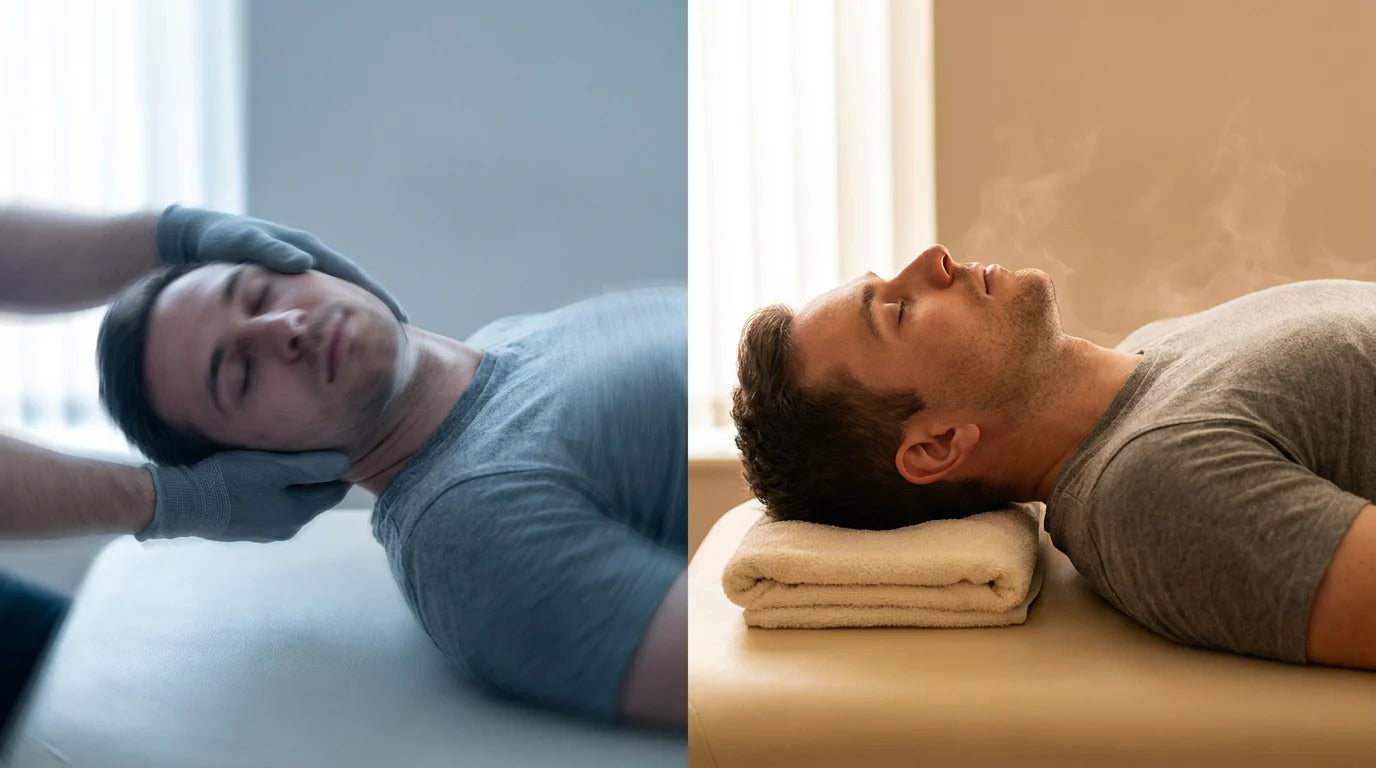
Fast movement triggers the guard. A sharp, quick input makes muscle contract protectively. Slow, sustained load does the opposite — it lets the guard drop. The crack is about 0.2 seconds. It is the fastest possible input.
Cold tissue recoils. Below a certain temperature, connective tissue behaves like elastic — you can stretch it and it returns to exactly where it started. Warm it, and it becomes willing to hold a new length instead.
Your neck crack is roughly two tenths of a second, at ordinary body temperature, applied to the joint that was already loose.
It fails all three requirements simultaneously. It was never capable of working. Which, if you've been quietly assuming you were doing something wrong, is worth sitting with for a second.
What Actually Holds: The Warm Window
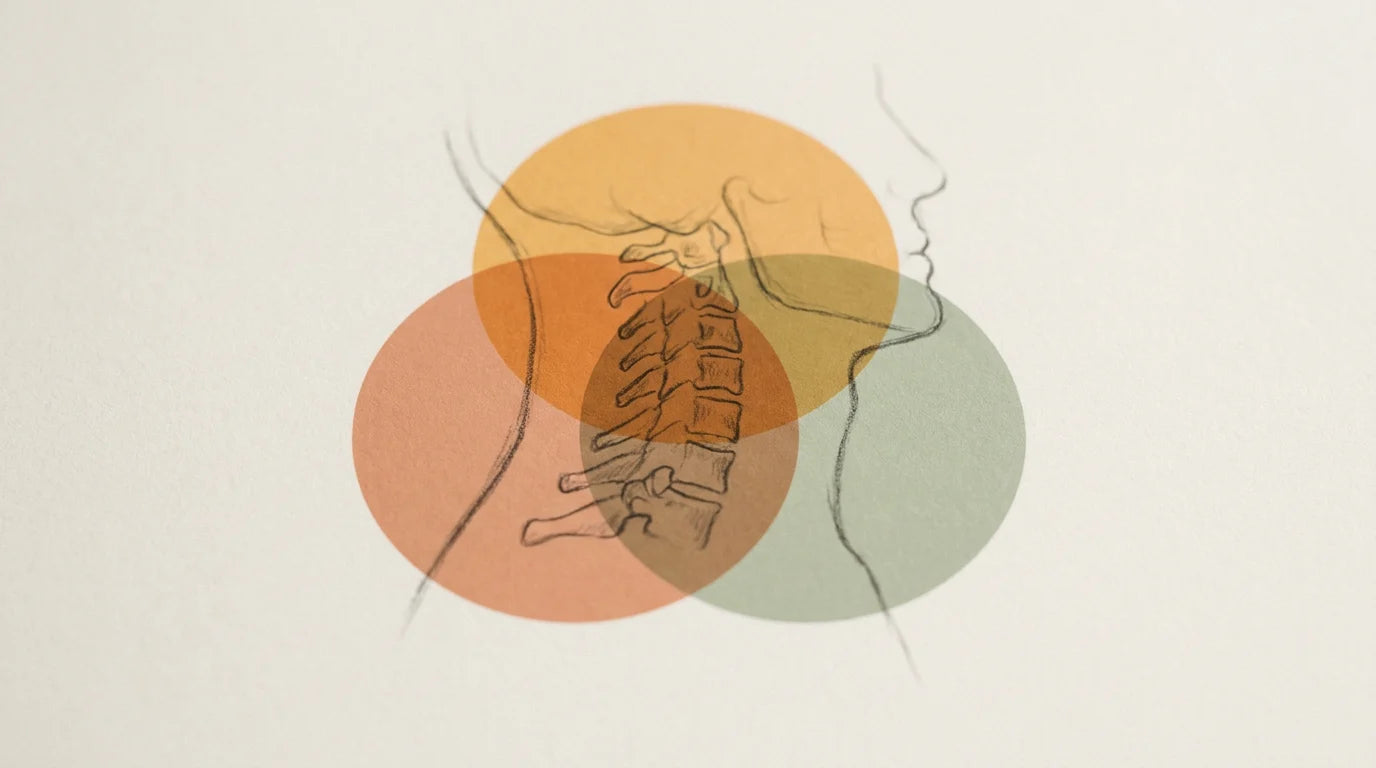
There is a window in which tight neck tissue will accept a new length and keep it. It opens when three things are true at the same moment:
1. Unlock — the muscles get a release signal and drop their grip. Vibration does this. It's the only one of the three that acts on the nervous system rather than the tissue itself.
2. Soften — the tissue is warm enough that it will lengthen rather than spring back.
3. Move — a sustained, angled pull gives the softened, unguarded tissue somewhere to go.
Miss any one and the window shuts.
Do them in sequence and the window never opens at all — heat wears off while you're massaging, the massage reverses while you're stretching. They have to overlap.
This is what a physiotherapist is actually doing with their hands for 45 minutes. Warm tissue, release the guard, sustained directional load, all at once. It's why physio works. It's also why physio has a two-day half-life — the window opens on the table and then shuts, and you're back in four weeks.
If you already know where this is going and you'd rather just look at the device, it's here.
See THERMALIGN →So Why Doesn't Everyone Just Do That?
Because the version that works costs money and time you don't have.
| Route | Cost | Frequency | Reality |
|---|---|---|---|
| Physical therapy | $90–$150 | 2× monthly | Works. Then the window shuts. |
| Chiropractic | $65–$100 | 2–3× weekly | Release only. No warmth, no load. |
| Massage therapy | $80–$120 | Monthly | Release only. |
Twelve months of any of those is $2,000 to $5,000, plus the commute, plus the scheduling, plus the fact that you need the window open on Tuesday afternoon and your appointment is a week Thursday.
Most people quit after a few weeks. Then it comes back. Then they buy a pillow.
The Same Three Things. Ten Minutes. At Home.
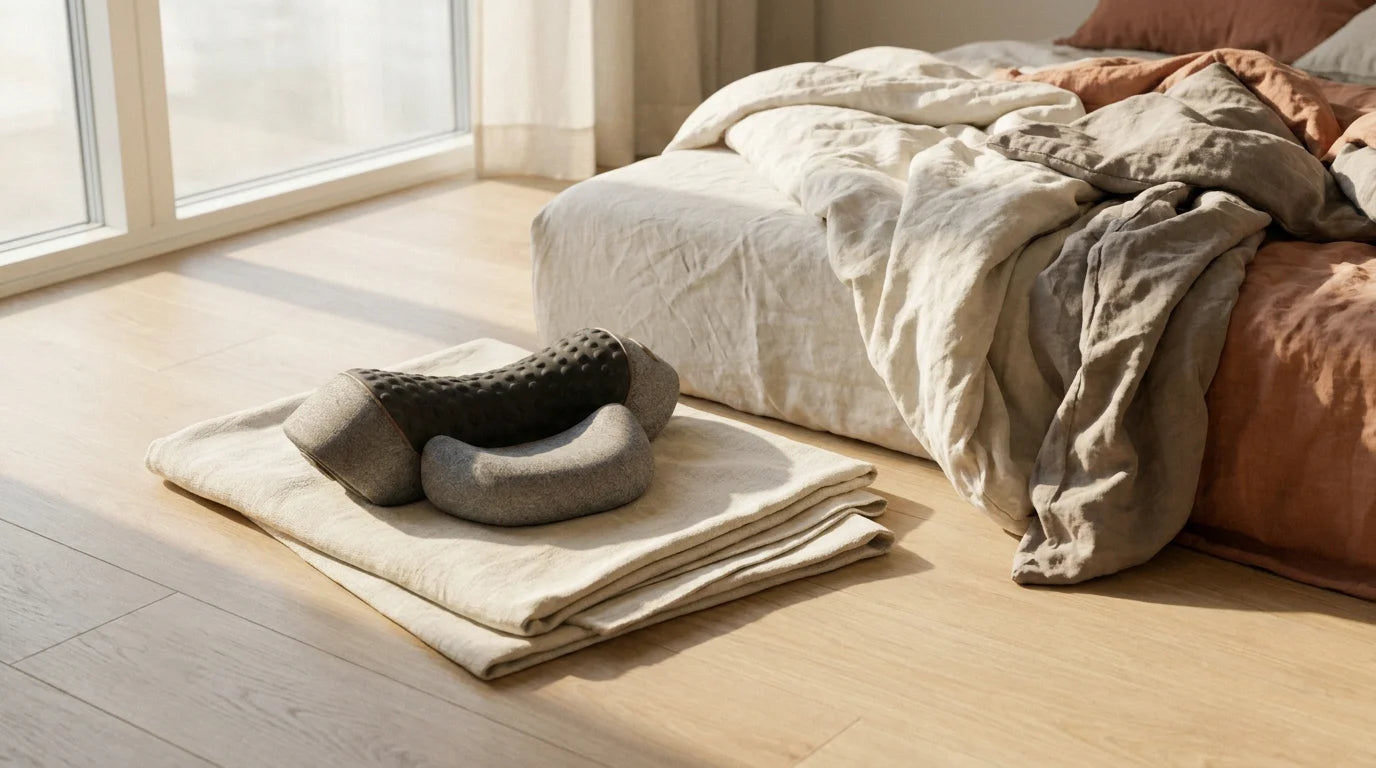
It's called THERMALIGN.
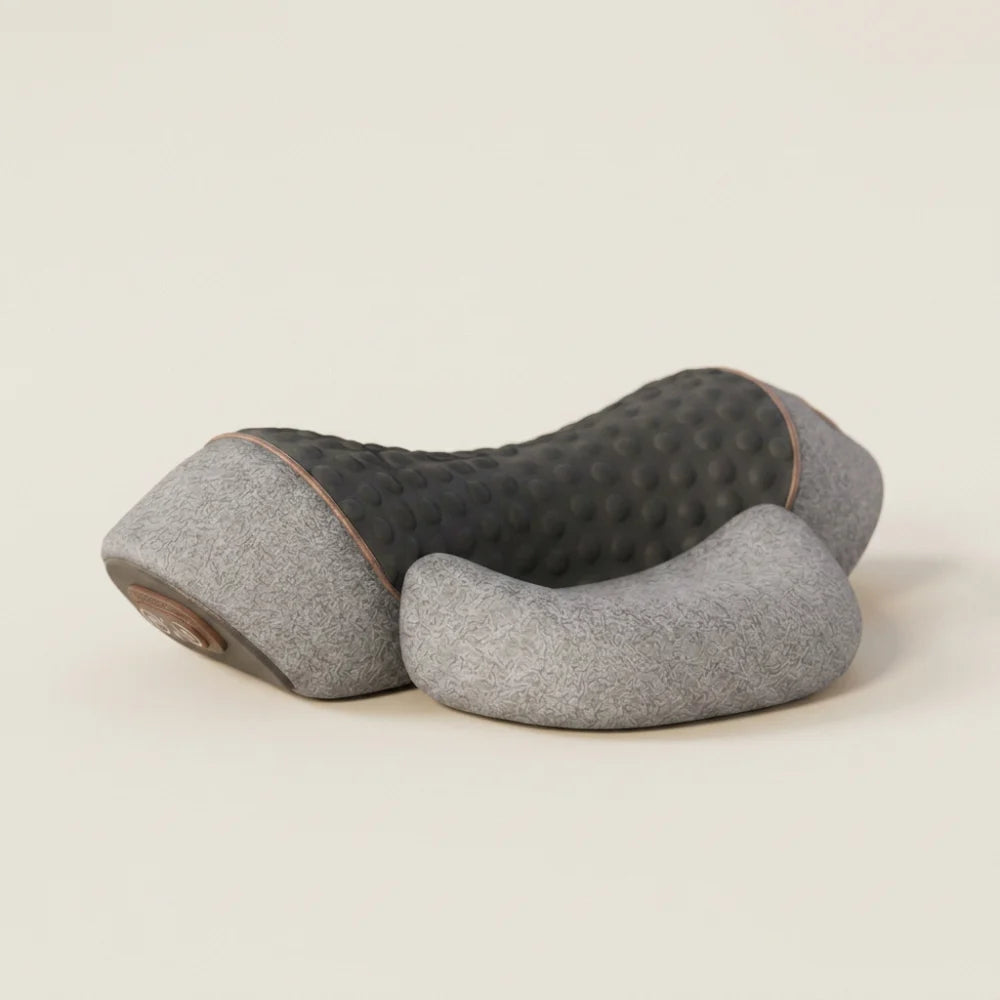
It's a cervical device designed to run all three elements of the warm window in the same session, at the same time — not as separate modes you switch between.
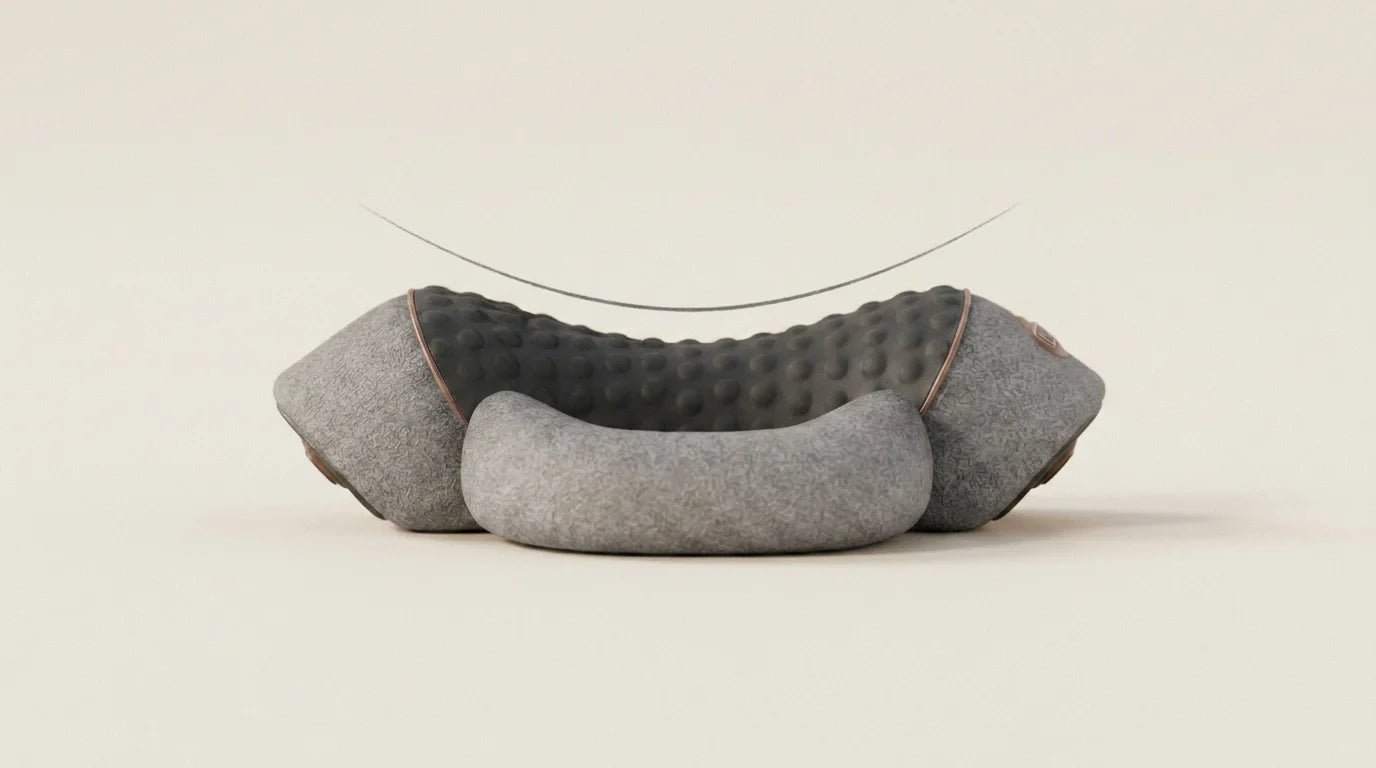
Sustained angled traction. The contour is shaped to the natural curve of the cervical spine and holds a gentle, continuous decompression — not a sharp pull, and not something you have to hold in position yourself.
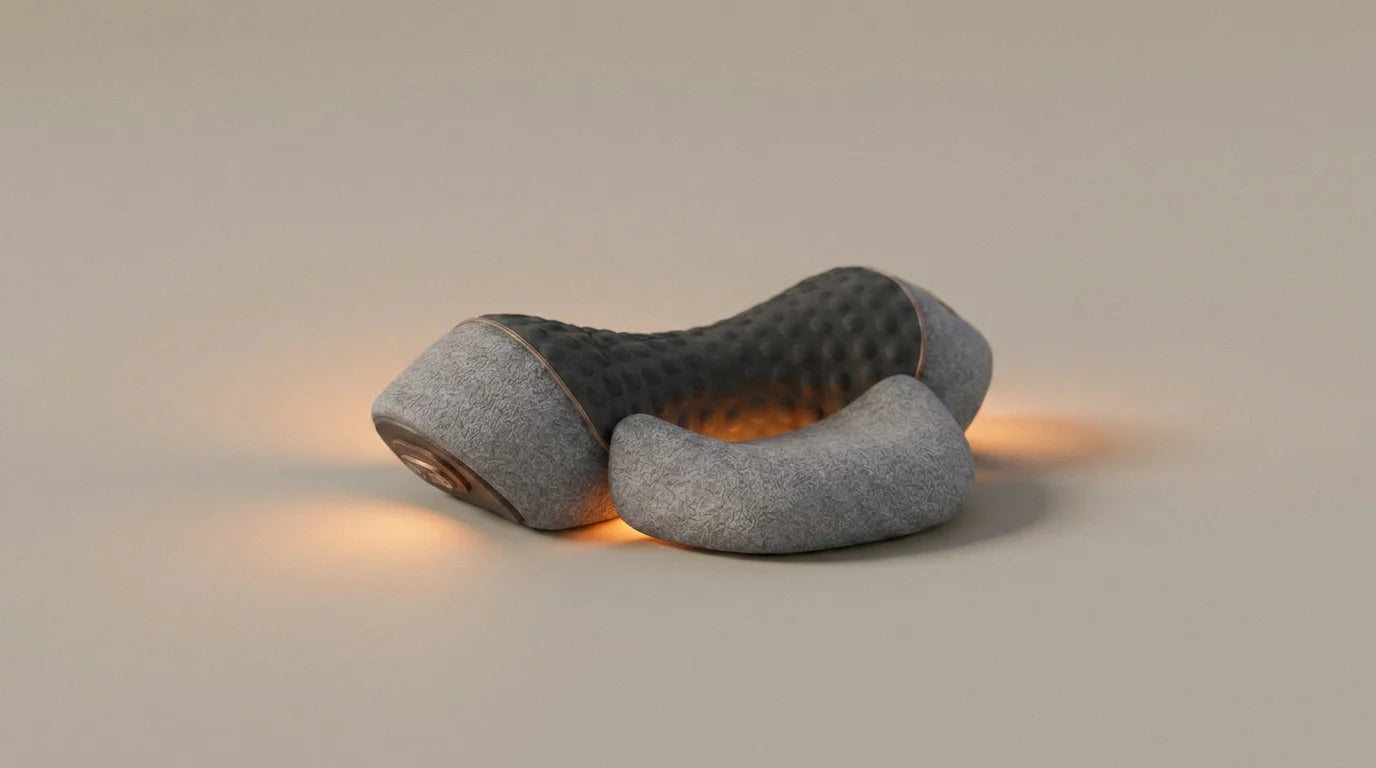
Therapeutic heat, applied during the traction. This is the detail almost every home method misses. Cold tissue resists traction and returns to where it started when you get up. Heat during the pull is what makes the position something the tissue will accept rather than tolerate.

Targeted vibration on the deep layer at the base of the skull. The suboccipital muscles — the ones you're actually trying to get at when you tilt your chin and push. Hands can't reach them well. A massage gun is too coarse for them.
All three, running together, for ten minutes.
The Part Nobody Talks About: Where The Urge Goes
You have been told to stop cracking your neck. Probably by a doctor, definitely by the internet, possibly by someone at work who heard it happen.
It doesn't work, and you know it doesn't work, because you've tried and each failure quietly confirms that something is wrong with you.
So THERMALIGN doesn't ask you to stop.
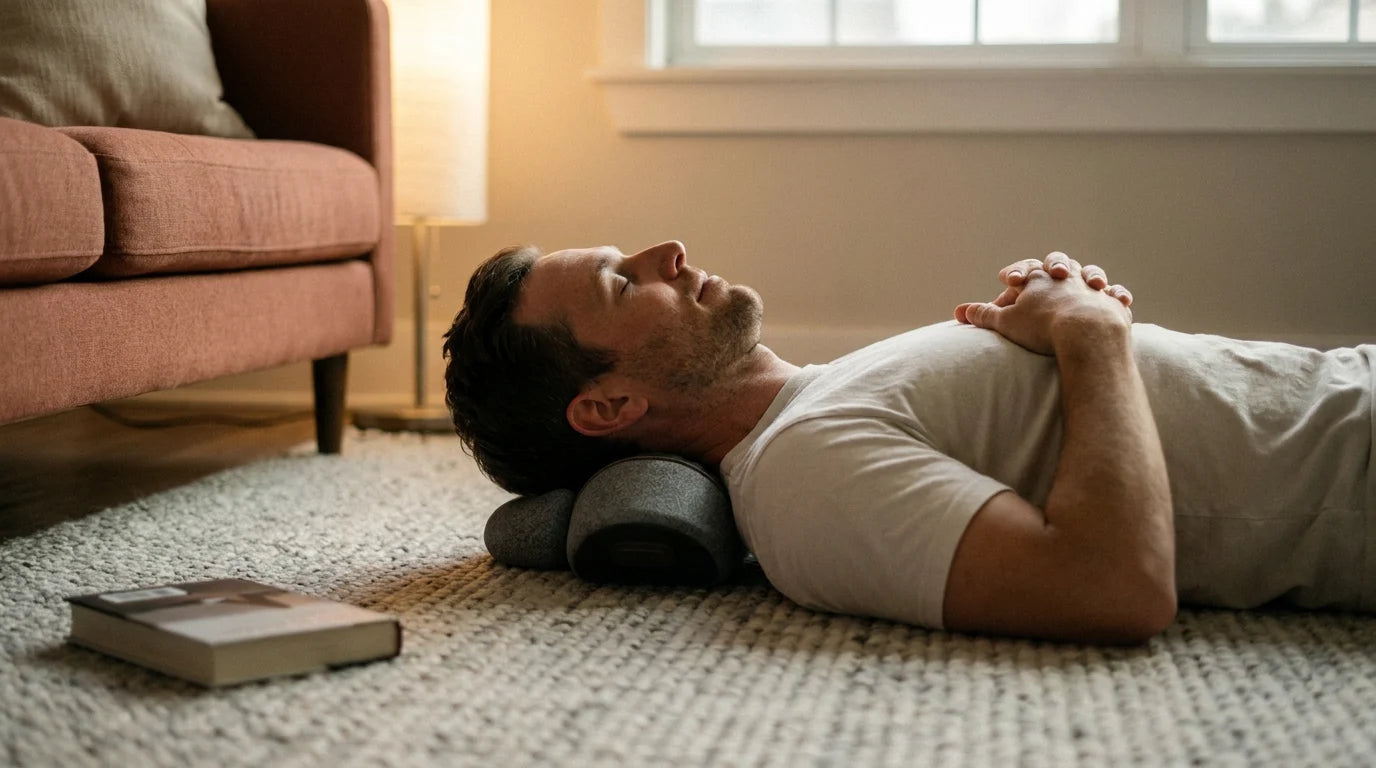
Ten minutes, lying down, at home, with heat and vibration and a slow pull. It's a real sensory event — that's why the vibration matters and why a heat pad on its own never satisfied anything. A heat pad gives you nothing to feel. The urge survives the whole session untouched.
This one gives you something to feel, and it does it for ten minutes instead of two tenths of a second, in the right position, on warm tissue.
No contorting at your desk. No loud crack in an open-plan office. No stranger's face.
The compulsion doesn't get scolded. It gets rehoused.
Ten minutes a day, at home, instead of twenty times a day everywhere else.
Check Availability →What This Isn't
It's daily management. Not a one-session fix.
Ten minutes a day, most days, the way you'd brush your teeth. If you use it twice and put it in a drawer it will do nothing for you, and we'd rather say that now than have you find out in three weeks.
It also won't stop you cracking your neck on day one. The urge is driven by something real, and something real takes longer than one session to change.
If you've read this far you've been sold to before by people who promised the opposite. That's precisely why we're not going to.
What People Report
Week one — the ten minutes becomes the part of the day you look forward to. Most people notice the post-session quiet lasts longer than a crack does.
Week two to three — the reach-for-it reflex starts getting interrupted. Not gone. Interrupted — you notice you're about to, rather than noticing you already did.
Around a month — for most, the count is meaningfully lower and the evenings are the biggest difference.
Before
- Cracking it 20+ times a day and losing count
- The relief lasting twenty minutes, every time
- Doing it in the bathroom at work so nobody hears
- Waking up stiff and getting worse until bed
- Another pillow, another massage gun, another drawer
After
- One ten-minute session instead of the all-day loop
- Relief you can feel hours later, not minutes
- The ritual happens at home, in private, on purpose
- Evenings that aren't the worst part of the day
- Nothing else to buy
We Don't Have Twelve Thousand Reviews
You've probably scrolled a page like this before and hit a wall of five-star reviews with stock photos attached. So here's where we actually are.
Tensorra launched this year. THERMALIGN is our first product. We don't have twelve thousand customers, and if you see a number like that on a neck device page you should ask where it came from.
What we have is a specific argument, which you've just read, and a device built to act on it. Whether it works for you is a question we can't answer from here — which is why the returns policy is what it is.
Thirty days. No restocking fee. No return fee. "For any reason" — and if the cycle hasn't changed, that counts as a reason.
That policy is the only honest form of proof a new brand can offer, so we made it the strongest part of the business rather than the smallest print on the page.
If it doesn't do what this page says, you're out nothing but the time it takes to send an email.
— Founder, Tensorra
support@tensorra.co — this reaches me
What It Costs

One physical therapy session, in most US cities, is $90 to $150. A course of them is a few thousand dollars and you'll still be booking appointments a year from now.
THERMALIGN is a one-time cost — roughly what a single physical therapy session runs in most US cities.
Except you keep it, and you use it every day, indefinitely, instead of booking again for Thursday.
Check Availability →Free shipping · Dispatched in 1–3 working days · 30-day returns
Try It For 30 Days
Use it daily for a month. If the urge hasn't quietened, if the ten minutes hasn't become worth doing, email us and send it back.
No restocking fee. No return fee. No form where you have to justify yourself — our policy says "for any reason", and if the cycle hasn't changed, that counts as a reason.
We're aware of what the reviews look like in this category — the 20% restocking charges, the returns that get "lost", the support email nobody answers. We wrote our returns policy specifically because of them.
Questions People Ask Before Buying
Is it going to make me stop cracking my neck?
Not immediately, and probably not entirely. What most people report is the count dropping and the gaps getting longer. If a product tells you the urge disappears in a week, be suspicious of the rest of what it tells you.
How is this different from the neck hammock I already own?
The hammock gives you traction on cold, guarded tissue. You get up and it returns. THERMALIGN runs heat and vibration during the traction, which is the difference between tissue that's being stretched and tissue that's willing to lengthen.
I've got a massage gun. Isn't this the same thing?
A massage gun does one third of it — it releases the muscle, then the muscle reverses within minutes because nothing loaded the tissue while it was released. It's a crack you can hold for longer.
How long does shipping take?
Free to the UK and the US. Orders are dispatched within 1–3 working days, then 7–9 working days to the US. Most US orders land 8–12 days after ordering. Every order is tracked and the link is in your dispatch email.
Can I use it if my neck is currently painful?
It's designed to be gentle rather than forceful, but if you have a diagnosed neck condition or you're in significant pain, check with your doctor first. We'd rather you asked.
What if it doesn't work for me?
Email support@tensorra.co within 30 days of receiving it and we'll send return instructions. No restocking fee, no return fee. If it arrived damaged or faulty, we cover the return entirely.
Does it work for the upper back too?
It's built for the cervical spine — the base of the skull down. The upper back restriction that drives a lot of this is adjacent to that area, but the device sits under your neck.
Ten Minutes Instead Of All Day
You've spent years trying to solve this with your own two hands, and the reason it hasn't worked isn't effort. It's that two tenths of a second on cold tissue at the wrong joint was never going to do it.
Ten minutes. Heat, release, and a slow pull, all at once.
Check Availability →Free shipping · 30-day returns
P.S. — If the only thing you take from this page is the bit about the twenty-minute gas reabsorption window, that's genuinely useful on its own. It's why you keep trying and getting nothing.
P.P.S. — The urge isn't a character flaw and it isn't damage you've caused. It's a real restriction sending a correctly-aimed signal to the wrong address. Everything on this page follows from that.
THERMALIGN
Heated cervical traction + massage
- Heat, traction and vibration in one 10-minute session
- Contoured to the natural cervical curve
- Designed for daily use at home
 Check Availability
Free shipping · 30-day returns